Planned maintenance
Pump station servicing and maintenance in Buckinghamshire
A pumping station is a small machine doing a dirty job every day. A proper service visit catches worn parts, sticking floats and silt build-up while they are still cheap to sort out, instead of at two in the morning.
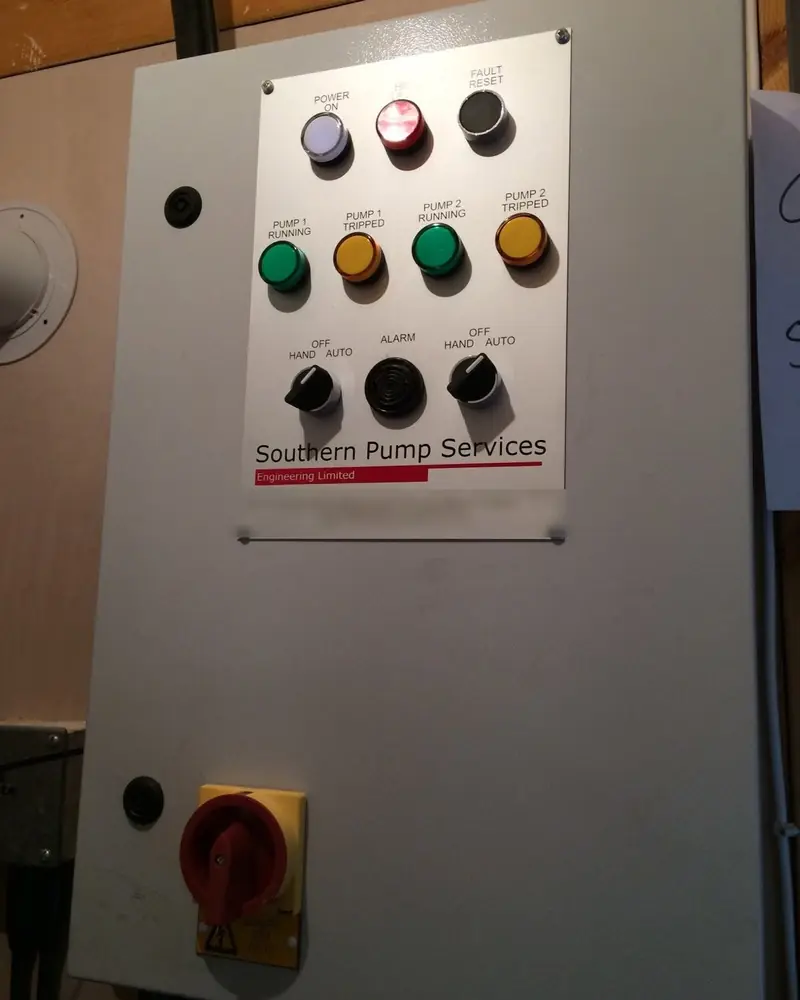
What we do on a service visit
Every station is a little different, so the visit starts with a look at how yours is laid out: the number of pumps, how they are controlled, the depth of the chamber and what it serves. Then the work itself follows a set routine so nothing gets skipped.
- Make it safe. We isolate the panel and set up the cover area so the chamber can be worked on without risk to anyone nearby.
- Lift and inspect the pumps. Each pump comes up on its guide rail or chain. We clean it, look at the impeller and casing for wear or blockage, check the seals and oil where the design allows, and test the motor and cable insulation.
- Check the level controls. Floats or level sensors are cleaned and tested so the pumps start, stop and alarm at the right heights. A float tangled in rag is one of the commonest causes of a flooded chamber.
- Valves and pipework. Non-return and isolating valves are exercised and checked for leaks or sticking, and we look over the rising main connection inside the well.
- Chamber condition. We note the level of silt, fat and debris and whether the walls, benching, covers and lifting gear are in good order. If it needs a desilt, we will say so.
- Panel and alarm. We test the control panel, the duty and standby changeover where fitted, run lights, trips and the high-level alarm, including any remote or dial-out alarm.
- Run test and report. The station is put back into service and run through a few cycles. You then get a written report with photographs, readings and a plain-English list of anything we recommend.
How often should yours be serviced?
There is no single right answer, which is why we prefer to see a station before recommending a schedule. As a rough guide:
- Single house, light use: once a year.
- Large family home, holiday let or annexe: once or twice a year, depending on occupancy.
- Shared station on an estate or block: at least twice a year, because one household's wipes become everyone's problem.
- Pubs, restaurants, care homes and commercial kitchens: quarterly is common, as fat and grease build up quickly.
Surface water stations that only run in heavy rain still need checking. Pumps that sit idle for months can seize, and you only find out in the first big storm.
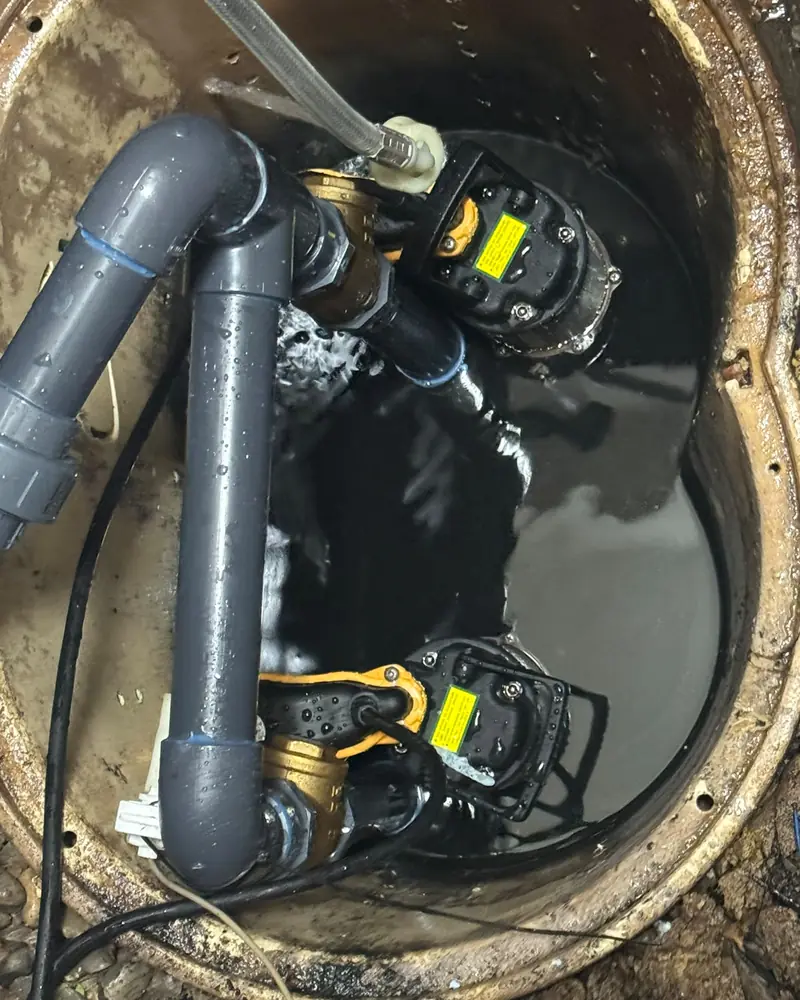
Desilting, tankering and jet washing
Over time every wet well collects grit, sludge and a floating mat of fat. A service tells you how much has built up; a desilt deals with it. Our tanker crews pump the chamber out, wash the walls and benching down and leave the pumps and floats free to move.
Desilting is often booked alongside a service so the engineer can inspect a clean chamber. On busier sites we will suggest how often it is likely to be needed so you can budget for it, rather than wait for the alarm.
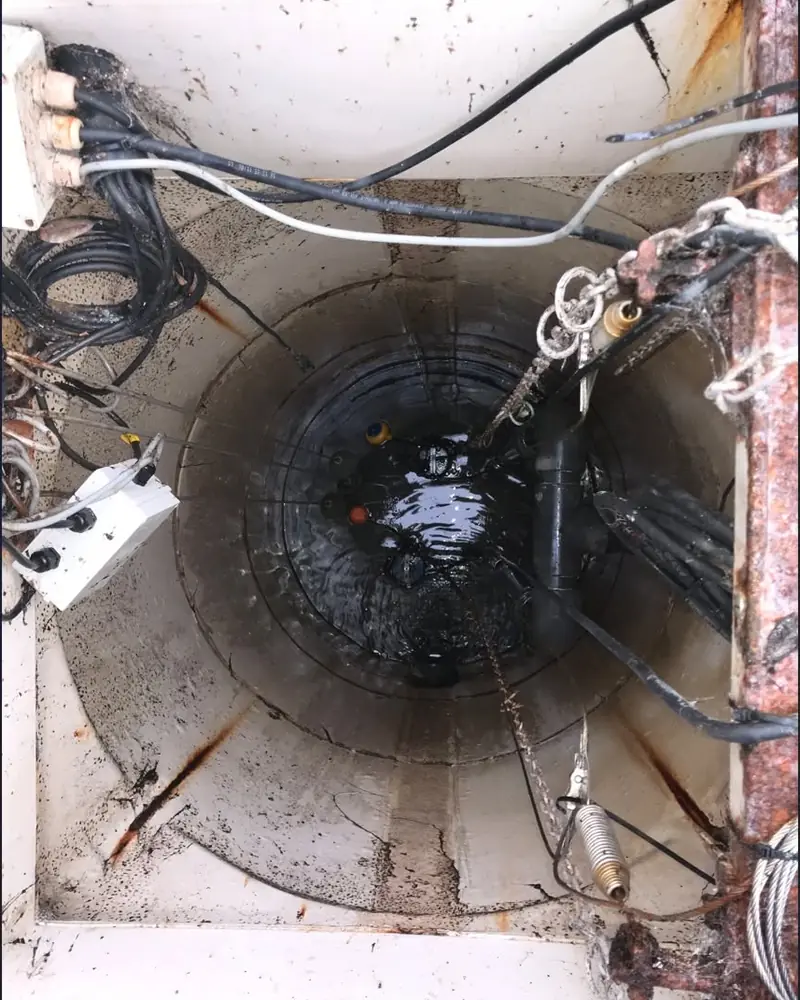
Stations we service
We work on packaged GRP stations, older brick and concrete wet wells, and above-ground pump sets, handling foul sewage, surface water or both. That includes stations from most of the well-known pump manufacturers, including ABS, Wilo, Caprari and Lowara, along with whatever control panel was fitted alongside them. If you are not sure what you have, a couple of photos of the chamber and the panel sent through the contact form or by email are usually enough for us to tell you.
If something does fail between visits, our repairs and emergency call-out service runs around the clock.
Book a service visit
Tell us roughly where the station is and what it serves, and we will suggest a visit date and a sensible schedule from there.